Novel Machinery
Single Pass Agricultural & Agroforestry Machinery
Concepts
CAD Fabrication Plans
3D CAD Renders
Manufacturer Liaison
'“…Necessity is the Mother of Invention…”
We would back that up saying, “…who wants to sit on a tractor and lose money unnecessarily?…”
Having grown up with a family of farmers, fitter and machinists, boiler makers and tinkerers, it was always going to be the case that Regrarians’ Darren J Doherty continued with that tradition.
Inspiration also comes from the late P.A. Yeomans and our good friend Allan J. Yeomans (1931-2024)—especially since we obtained our first Yeomans Keyline Plow in 1995—an ‘SB’ (single-beam) model which was designed specifically by Allan for mounting PTO-powered implements following on from Yeomans’ catch-cry that, “…this is the only plow you’ll ever need…”
As we were doing a lot of soil preparation using the Yeomans Keyline Plow we were spending a lot of time ripping for forestry, olive groves, orchards and vineyards—and subsoiling for pasture renovation—all at 3-5kmh, which is walking pace. We also were on the ‘Pottiputkis’ for weeks on end, getting the direct feedback from our own soil preparation. All of this gave us many hours to think,
“…how can we do this better and quicker…”
And so it went something like this:
-
![1996 Woodbrook Farm Agroforestry Vineyard]()
1995 - First Yeomans Keyline Plow
Our dear friends Nada & Tony Smark (then of Woodbrook Farm) bought us our first Yeomans Keyline Plow as payment for us designing & developing their first vineyard & forest.
Since we Nada & Tony first bought this Keyline plow in the mid 90’s we’ve been actively tacking on all kinds of other implements to make this plow as multifunctional as possible and ‘stretch’ the diesel used to fuel pull it.
-
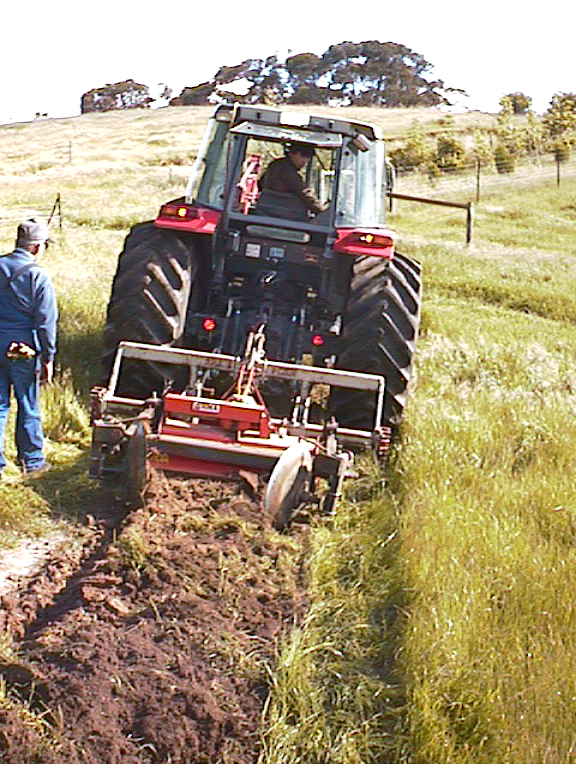
![2000 - Yeomans Keyline Plow and Sicma Rotary Hoe]()
1996 - First Use of Yeomans' Attachment Kit
Brett Davis & Neil Meadows (then of ‘Silviculture Victoria‘) were the first to have a crack, using the Yeomans Plow Co. ‘Attachment Kit’ to mount a 1m wide Sicma rotary cultivator/hoe on behind our 3SB Yeomans Keyline Plow, allowing us to deep rip and mechanically cultivate the grass sod—eliminating the use of herbicide—for forestry and vineyard ground preparation.
-
![]()
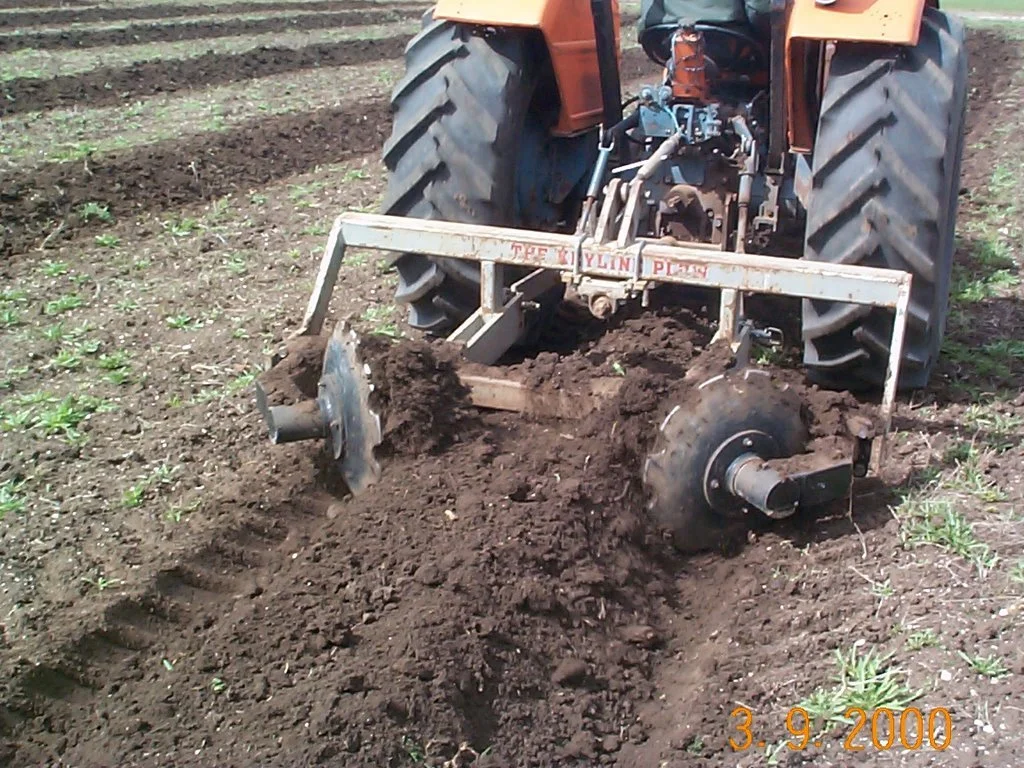
1997-98 - The DOJO Arrives
The DOJO is the world’s first ever, single-pass ripper-cultivator-mounder. It was an incredibly simple unit, using the coulter mounting arms and coulter assemblies from a Yeomans Keyline Plow coupled with an adjustable ‘U’ beam to mount the mounding discs behind the rotary hoe.
‘DOJO’ was from ‘DO’herty & ‘JO’nes, for Regrarians founder Darren Doherty & his late step-father Joseph ’Joe’ Jones (1947-2021), who worked on the design, fabrication and operation of the unit across SE Australia. -
![]()
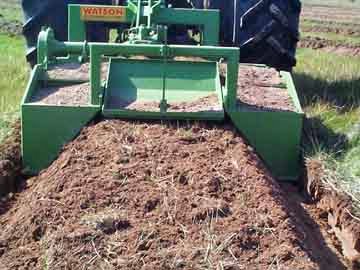
1999-2000 - Disc Mounders
While the DOJO was super effective, our use of the Yeomans coulter assemblies to mount the mounding discs was not as robust as we would have liked and so we started getting much heavier duty units made by Rex Watson Machinery in Geelong (VIC, AU).
These discs were particularly useful in working up mounds immediately prior to planting.
The primary purpose for mounding was to both increase topsoil depth and drainage. When oriented using Keyline® geometry, the mound gutters also directed rainfall run-off to primary ridge lines. While this had advantages on sites where soils were shallow and poorer drained, we also found that mounding tended to increase the incidence of 'butt sweep' in farm forestry plantations, a growth pattern defect that reducing the potential for a tree to become a sawlog.Accordingly, by the mid-2000's, we only used mounders when developing non-timber woody plantings (e.g. tree crops, orchards, vineyards etc.), and encouraging us to develop our 'advanced preparation' method, whereby soil improvement treatments would be conducted in the year or two ahead of establishment, rather than taking the usual minimalist approach most people take when preparing sites for woody plant establishment.
-
![1999 - Rotary Hoe Bed Former]()
1999 - Rotary Hoe Bed Former
While working on the Mornington Peninsula installing olive groves and farm forestry, we saw a 1.2m Celli rotary hoe for sale in Shoreham and struck a deal with the farmer where it was a clean swap for a 1970’s 9 shank Yeomans Plow Co Bunyip Slipper Imp we’d bought years before.
Rex Watson Machinery (Geelong, VIC, AU) were converting these units (and power harrows) into bed formers for market gardens and we jumped at the chance for them to convert the Celli. This unit did an amazing job for the next 20 years (a credit to the late Rex Watson & Celli), with the late Dave Griffith's (then of 'Geometree') buying it off of us in the mid 2000's when we moved to Viet Nam to work on the Sustainable Cacao Agroforestry System (SCAS) project under Howard-Yana Shapiro of Mars.
From a soil preparation perspective, using this implement provided us with a market garden finish on broadacre settings—making it much more productive for planters. The flat top on these mounds also retained water and held its form much better than those formed using the discs.
Given the weight and length of this unit, and because we were using <75HP tractors back then, we didn't mount this on the SB tool bar to rip and mound in one pass as we had with the DOJO.
As we mentioned on the last post (#4 Disc Mounders), it became clear that mounding had a negative effect on the form of trees growing for sawlog production and so, from the mid-2000's we only used this machine for non-timber woody plant systems. -
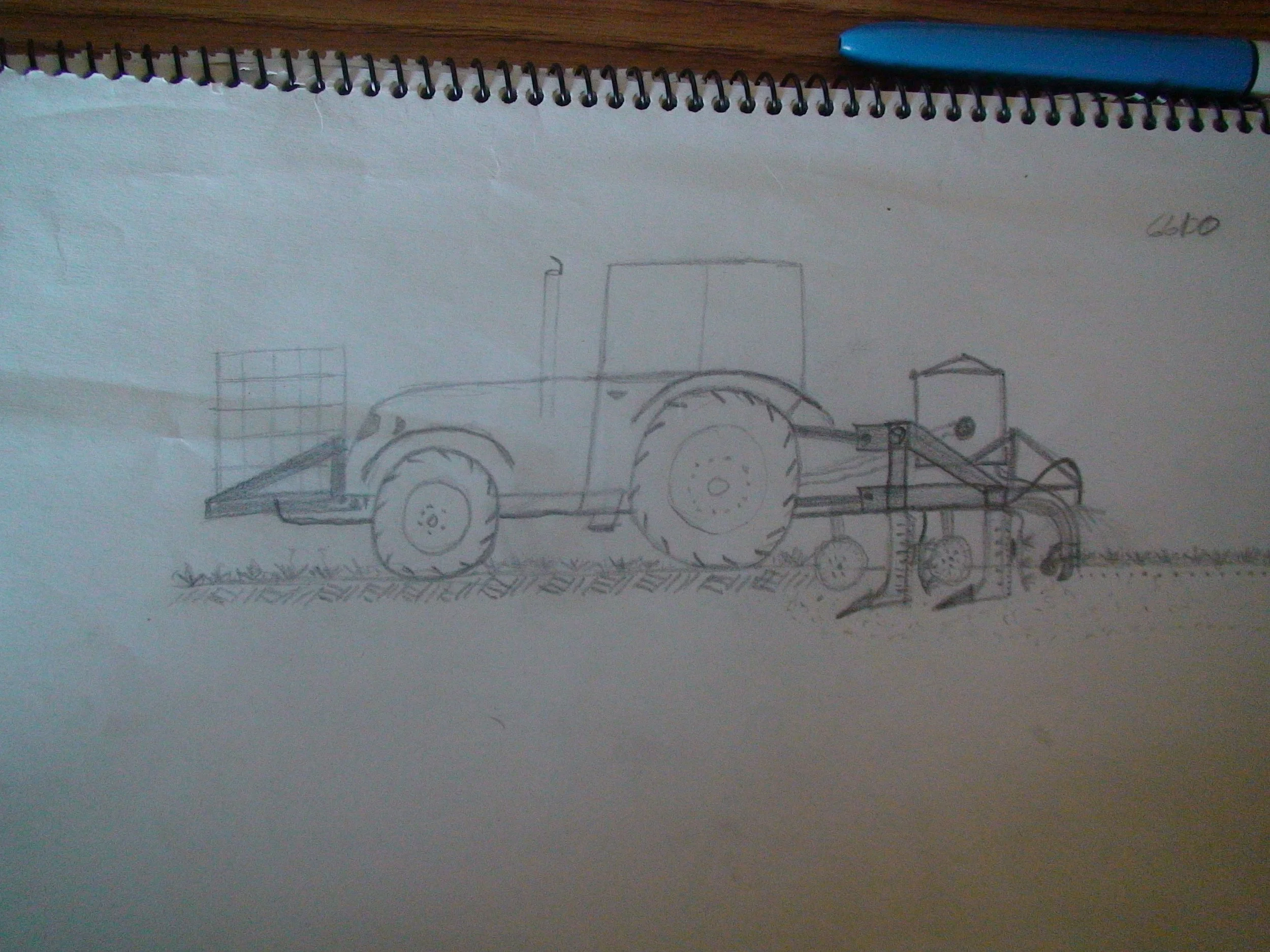
![2007 - Keyline Super Plow Concept Design]()
2007 - Keyline Super Plow Concept Design
"...Ploughing should be no faster than a horse walks..." ~ Karl-Ernst Osthaus (2004)
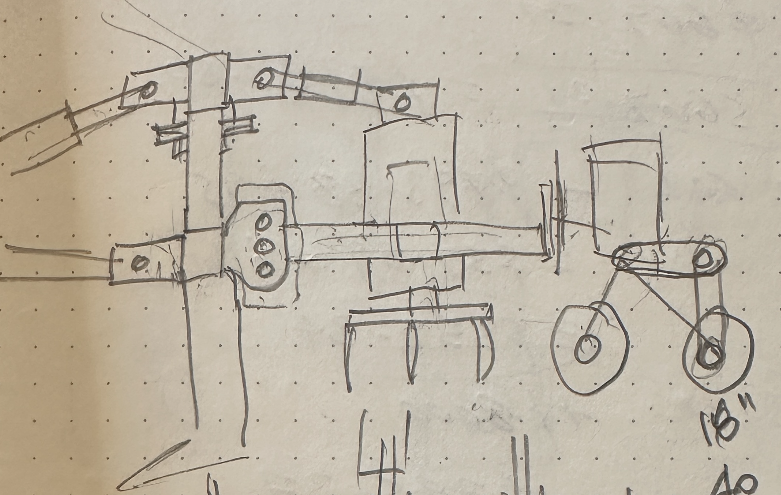
Sitting on a tractor, driving at 3-4 kmh, or walking beside machinery gives one plenty of time to think about how to combine functions, increase productivity and profitability.
In October of 2007 Regrarians’ founder Darren J Doherty drafted this sketch of the first Keyline Super Plow, with a IBC mounted on the front (for liquid bioferts/microbes), and a seedbox and no-till tyne drills mounted onto a Yeomans Keyline Plow.This design went on to become the catalyst first for ourselves and then for others to create implements inspired by this core assembly.
-
![2007-11-RPC-Caravan-VT]()
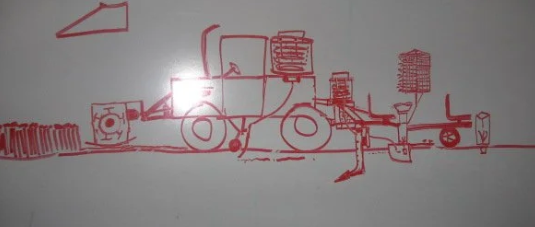
2007 - Ripper Planter Caravan Concept
We had many a conversation over the years with planters and tractor operators about a single-pass concept we called the ‘caravan’—combining cover crop rolling/cutting, biofertiliser/microbe liquid injection, deep ripping, planting and guarding trees.
Then in November of that year during a ‘Keyline Carbon Farming Course’ we led at Abe Collins’ dairy farm in Vermont (USA), Regrarians’ founder Darren J Doherty drew this concept (built around an MB-Trac tractor we were using at the time in Australia) while in a conversation with course attendees Ethan Roland Soloviev and Gregory Landua.
In the nearly 2 decades since, most of the concepts in these drawings have become reality—both by our own hands but also in the hands of others who have done Regrarians training programs around the world. -
![Keyline Super Plow MK1]()
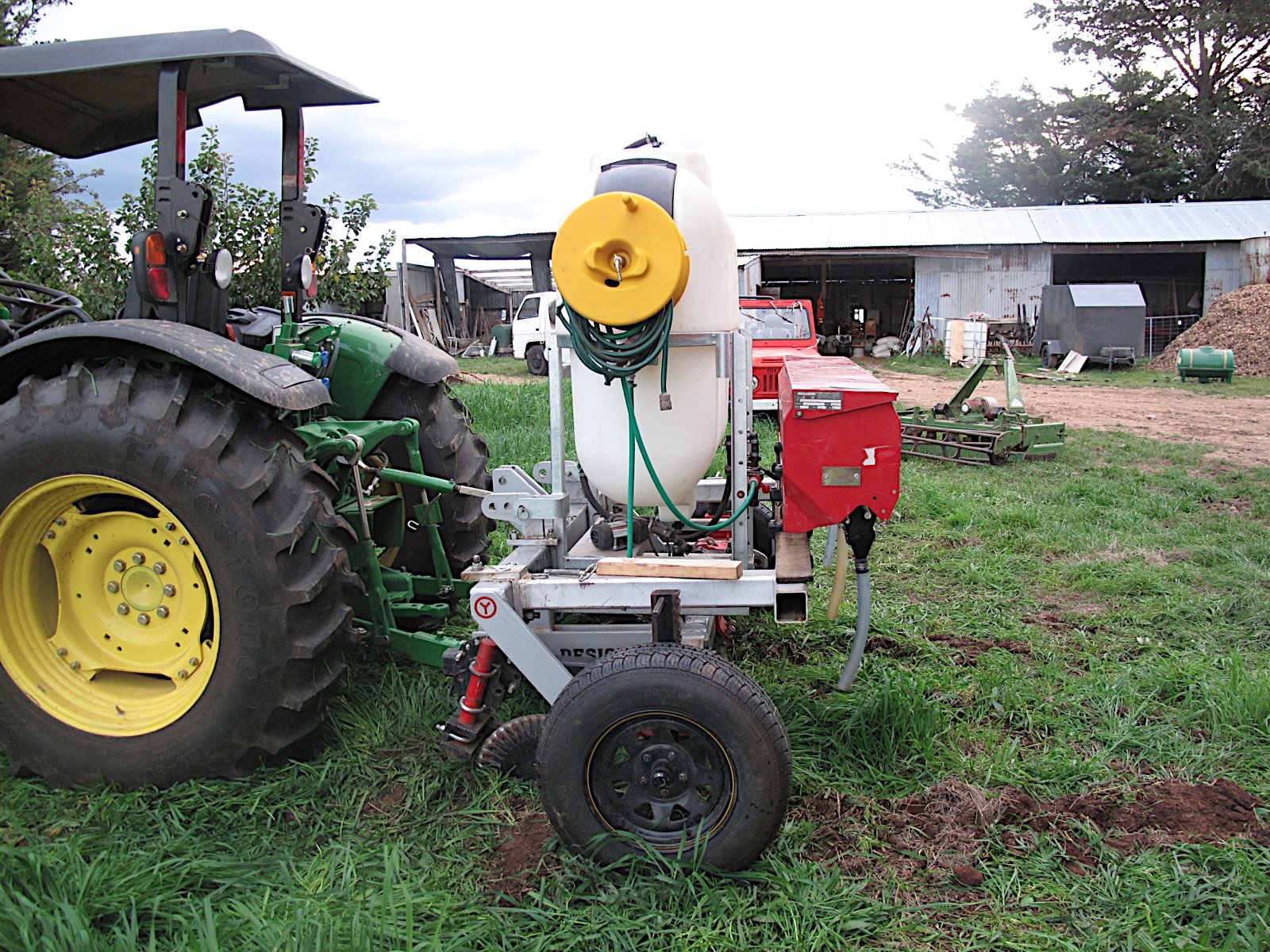
2010 - Keyline Super Plow MK1
10 years after we started working with the late Stan Falloon at Taranaki Farm (Victoria, AU), his son Ben Falloon (now Florence of Taranaki Farm) moved to the farm and we started working closely on a lot of the farm management and development.
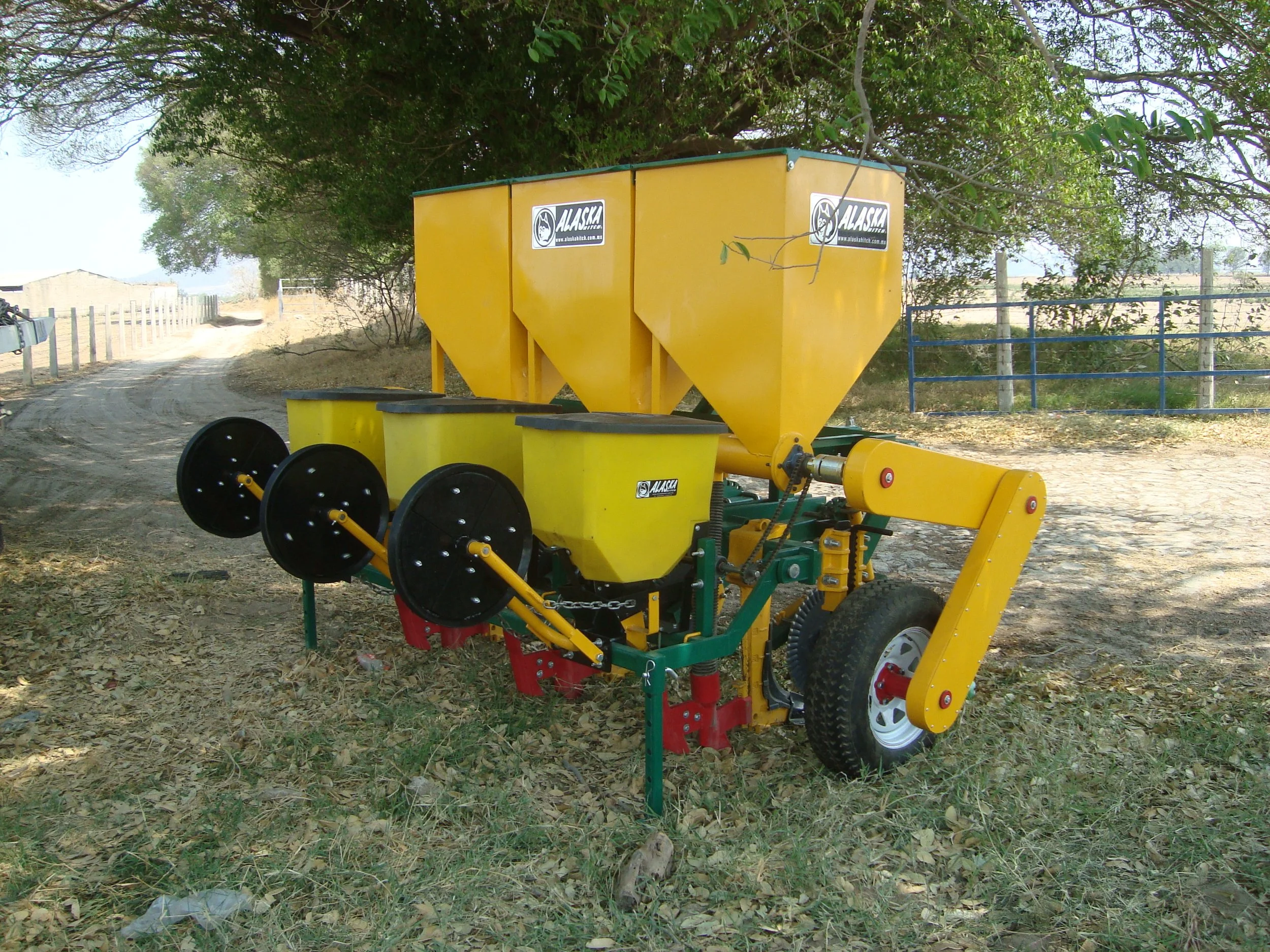
This included Ben (now Florence) fabricating what was the first-ever ‘Keyline Super Plow’—again based on the Yeomans Plow Co. ‘SB’ toolbar, with a 200l tank (with 12V pump) for biofertilisers/microbial liquids and a Thomas Hatzenbichler Agro-Technik Gmbh Exaktor (no longer manufactured unfortunately) fluted-roller seed box, which metered seed directly into the Yeomans rip lines.
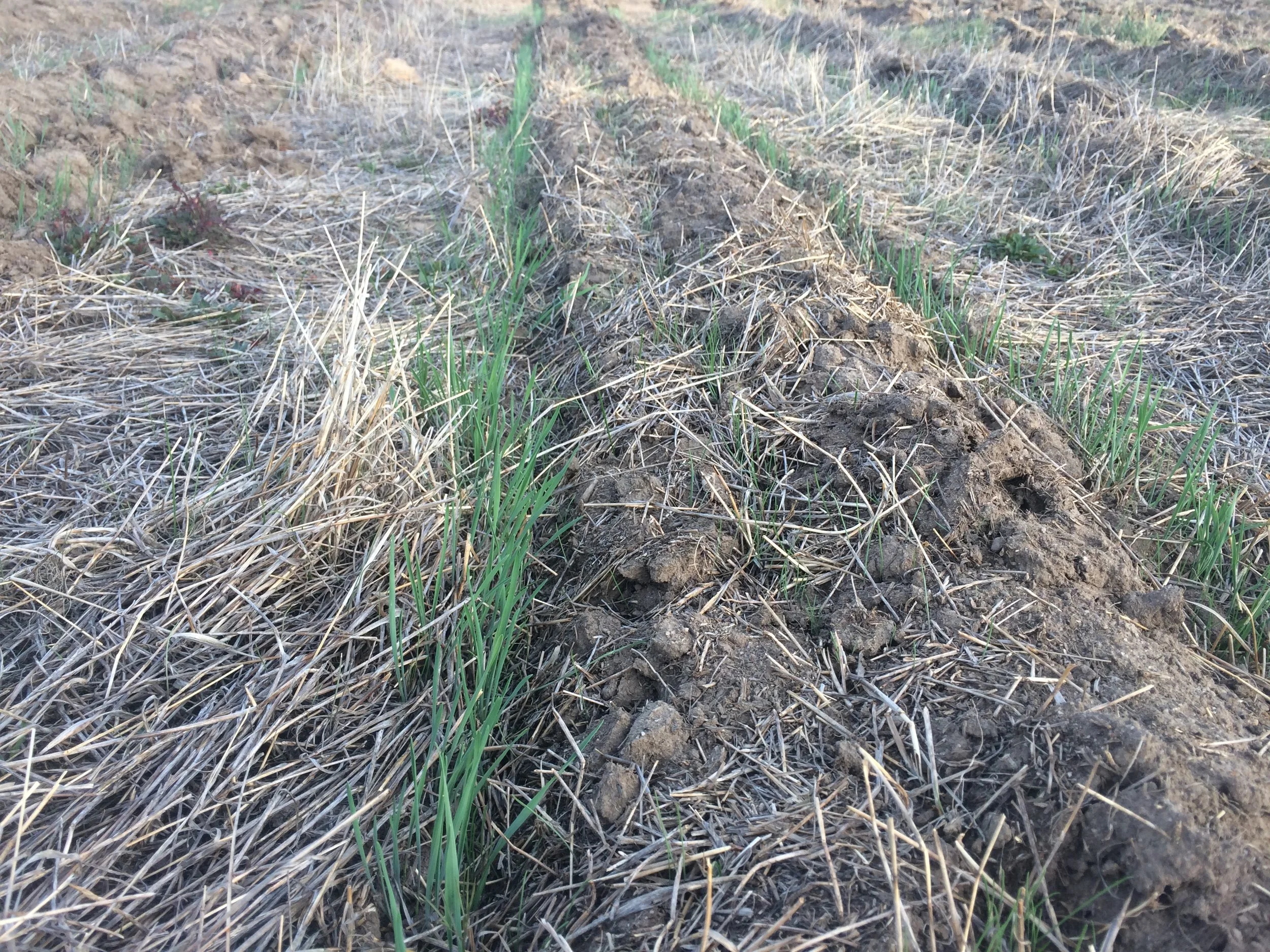
While it all mechanically functioned as intended, sowing behind a rip line is a marginal activity as so much of what is sown goes too deep or too shallow. Nevertheless, being able to inject bioferts/microbes into the rip lines is a good treatment and increases the productivity of subsoiling.
Perhaps the 'funnest' part of this unit was the 'mechanism' for having the Yeomans depth wheel drive the seeder driveshaft. Firstly, welding a bit of hex rod onto a bit of tube and flat on the depth wheel hub, then welding a 19mm spark plug socket to another length of hex to complete the drive—locked in place with a section of fencing wire. A bit unwieldy at first but a classic bit of tinkering—so much so that subsequent versions of the Keyline Super Plow would use a similar set up—albeit with a linch pin instead of the wire! -
![]()
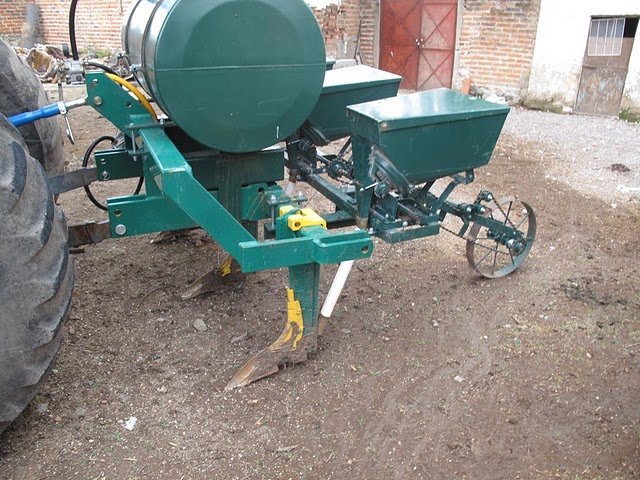
2011 - Yomex Arrives
We first went to México in 2009 on the invitation of the late Eugenio Gras (founder of MasHumus)—leading a series of Keyline® Design Courses and Keyline planning consultancies around the country with him.
Eugenio came to Australia as part of the ‘RegenAG® Workshop Series’ and this exposed him to the Keyline Super Plow MK1 at Taranaki Farm. Following the importation of a Yeomans Keyline Plow (SB), we then worked with him to develop his own version which he towed from job to job with a very cool set up.
In 2011 we travelled back to Guadalajara to find that a team in that city had made what they called the 'Yomex'. We were shocked as it was a complete copy of Yeomans' original equipment and worried that we would be implicated in this.
We were also amazed that a local pattern maker had taken 3 weeks to craft a timber casting mould for the Yeomans ripper—only making the depth increments in cm not inches! That they had determined the metallurgy of the original casting and that they'd bulked the shank up in places. Alas we were aghast at the potential implication, the chutzpah and the incredible quality of what these master fabricators had developed.
To that end Eugenio (an Industrial Engineer by degree) and this team of fabricators had embarked on the development of a range of innovations including adding mechanical planters and liquids tanks for the biofertilisers and microbes they were training rancheros and campesinos alike to create on their farms across this incredible country. -
![Yomex Mega Plow]()
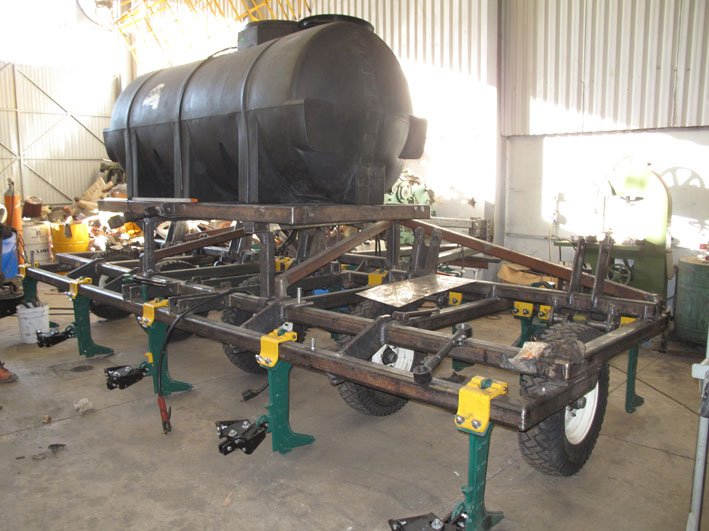
2011 - Yomex Mega Plow
From 2009 to 2013 we worked a lot with the late Ing. Eugenio Gras (founder of MasHumus). Initially leading Keyline® Design Courses across México, then editing his book 'Cosecha de Agua Y Tierra: Diseño Keyline o de Línea Clave', having him come to Australia and Europe for the 'RegenAG® Workshop Series' (2010-2011) while working with him on a wide range Keyline farm planning consultancies.
In the previous entry we mentioned the development of the 'Yomex'. On this occasion, Eugenio invited Regrarians' founder Darren J Doherty to consult with him on the conversion to ecological agriculture of México's largest rice farm, Ing. Jorge Ayala Menéndez' ‘Pancho Villa’ & ‘Laguna Blanca’ (10,000ha on the Usamacinta River on the Yucatan Peninsula). You can learn more about that project in our interview titled, ‘Cold Turkey Rice in México’.
We suggested using the 'Super Plow' concept for the break crops (mostly legumes) and so the owner worked with Eugenio and a workshop in Guadalajara to develop what quickly become labelled the 'Mega Plow'—again copying much of the Yeomans Keyline Plow platform, while adding a large biofertiliser tank, seedbox and Rodale Institute-designed roller crimper.
We never got to see this machine in operation, largely because we wanted to keep at arm length from something we could be implicated in the development of. In any case the whole 'Yomex' story died soon after as Eugenio had a falling out with the fabricator over government funds that went missing in the fabricators account.
-
![]()
2012 - BioTerra Plow
In 2011, the late Eugenio Gras, Regrarians' Darren J Doherty and Regrarians Alumni Jesús Ruiz Gámez (Linea Clave) enjoyed a meal at a restaurant in El Gastor in Andalucia. The restaurant had paper sheet table cloths and on our table it became a sprawling sketchpad, as we all started designing what became the 'BioTerra Plow' the next year.
We were all there for a RegenAG® course Eugenio & Darren were teaching at La Donaira (Andalusia, ES), and earlier that day Jesus had run a demonstration of his own Keyline Super Plow'
The ‘BioTerra’ still stands as the most multi-functional ‘Super Plow’, with its 3 deep rippers, coulter discs, and depth-wheel ground-driven compost feeders and no-till tyne drills. The unit also had separate tanks for biofertilsers and microbial liquids.
In 2024, at a Regrarians Keyline® Masterclass with the Fundación Pro Cuatrocienegas, (Coahuilla, MX), the foundation’s Director, Gerardo Ruiz Smith, had secured Eugenio’s original unit and we got this amazing machine working in time for the event.
-
![2014 - Keyline Super Plow MK2]()
2014 - Keyline Super Plow MK2
McIvor Farm Foods’ (Tooborac, VIC, AU), have been a Regrarians’ alumni and client since 2009. McIvor’s Jason Hagan is an innovative farmer and excellent welder and he took our concept with the development of what his Belinda Hagan (McIvor co-founder and owner) called ‘Yvonne’—because it became his ‘girlfriend’ as he was spending so much time tinkering with his creation.
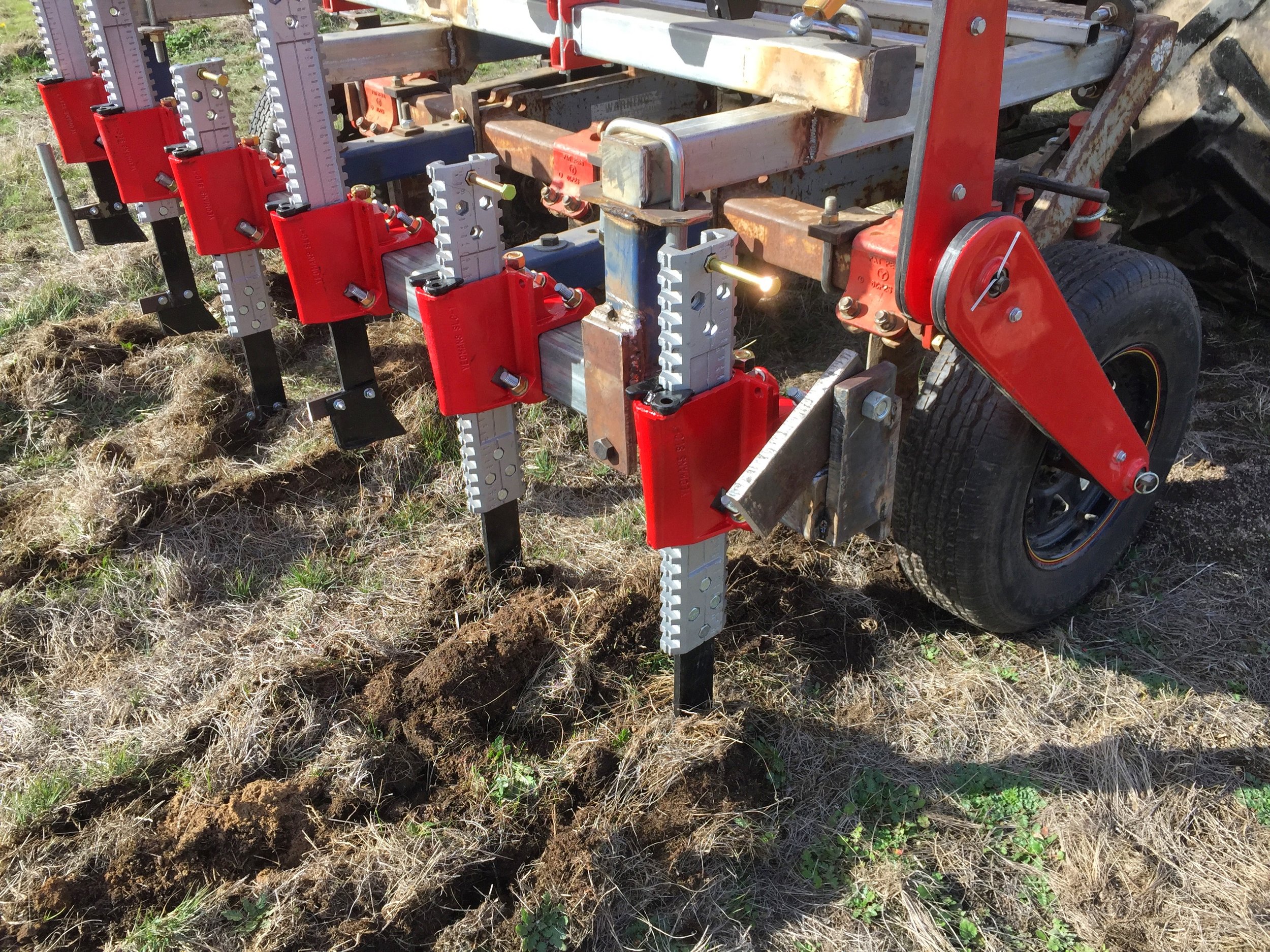
As with the original unit (and Jesus’ in Spain), Jason fitted up a Hatzenbichler Exaktor seedbox and a gang of 6 ShieldAg Acra Drill Unit (ADU) no-till disc drills. Jason cleverly mounted an extra toolbar with fixed position 100mm SHS posts to mount 2 disc drills on either side of each Yeomans shank.
We had discussed placing disc seeders in this way, having observed over decades the ‘dead-zone’ that appears on either side of a rip line in pastures, and the loss of seed when sowing directly behind the ripper. This innovation solved that issue extremely well. -
![2015 - Keyline Super Plow MK3]()
2015 - Keyline Super Plow MK3
Following the success of Jason Hagan’s MK3 unit, we decided to give the late Allan Yeomans’ latest invention, the ‘Sticky Leg’ a go as an option—providing us with more flexibility in terms of penetrating denser sod and horizontal adjustment (MK3 only had vertical height adjustment). We fitted ‘Baker Boot’ no-till points to the legs, with one either side of each Yeomans ripper.
The result was not as successful as we had hoped as there was excessive disturbance. This could have been remedied in part from having coulter discs run in front—we didn’t go with that due to the difficulty and felt it would be easier to just fit tyne drill assemblies with coulters already fitted, which we decided against investing in. -
![2017 - Keyline Super Plow MK4]()
2017 - Keyline Super Plow MK4
Over the first few months of 2017, Regrarians REX Alumni and Aeronautical Engineer Luke Hallam and Regrarians’ Darren J Doherty had the first of two intense (remote) design sessions that, together with the amazing help of McIvor Farm Foods Jason Hagan, resulted in the first of two new versions of the Keyline Super Plow that year.
We purchased more of the same ShieldAg Acra Drill Unit (ADU) no-till disc drills as Jason had used as used in MK2 unit, while mounting them on a horizontal toolbar that was adjusted vertically using U bolts on either side of the main frame. While effective as a toolbar, it was difficult to adjust the depth. We would have better off following Jason’s MK2 vertical post concept and put U bolts on each post to allow horizontal adjustment. As it stands, depth adjustment is more critical than horizontal adjustment.
Luke did design a really cool tow hitch that allowed us to tow the unit behind a 4WD or ute/pick-up. The MK4 has been lent to quite a few Regrarians Alumni across Victoria and continues to work well—though it is due for some modification to overcome the vertical adjustment issue. -
![2017 - Regrarians Ripper Seeder MK1]()
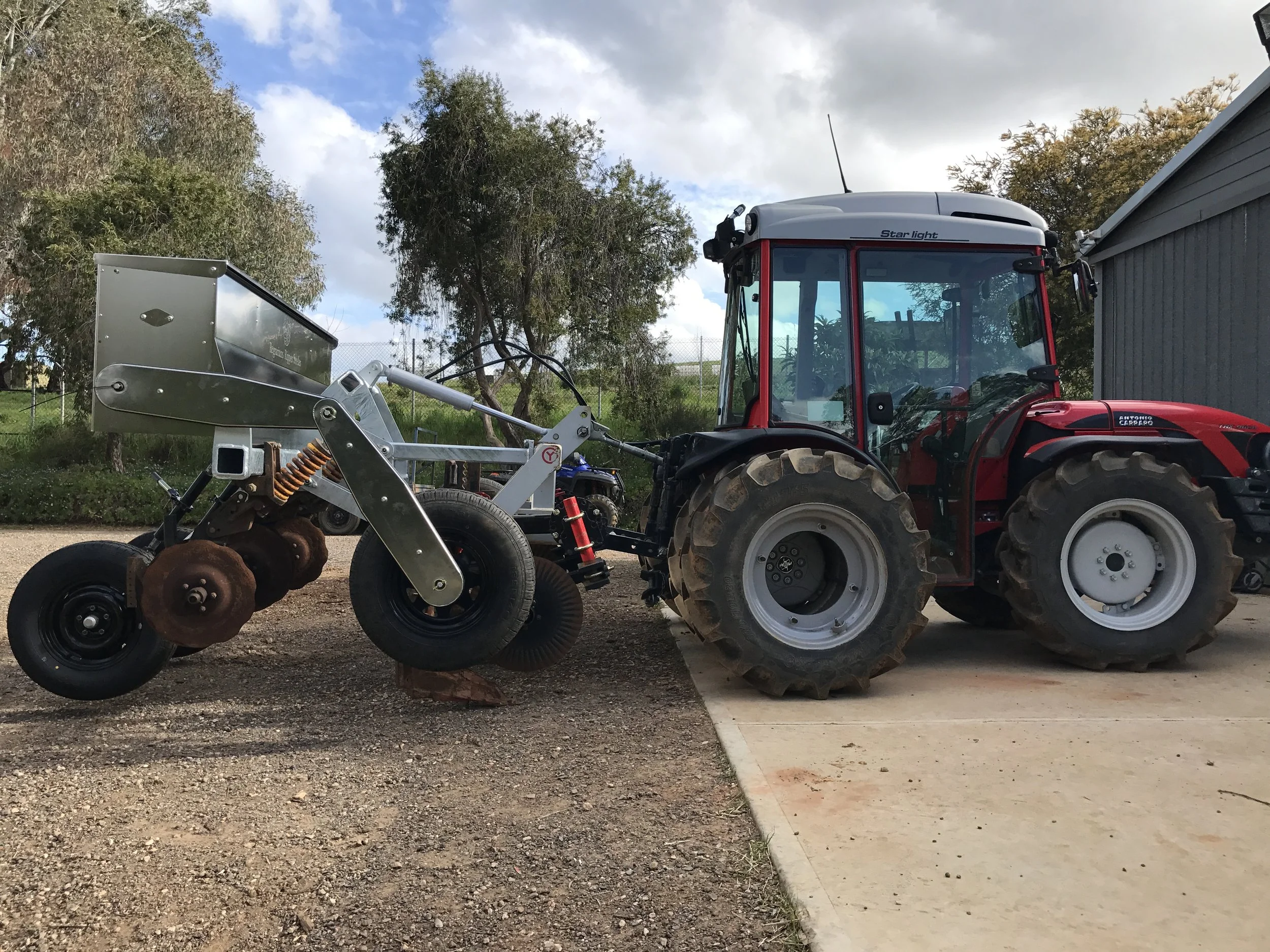
2017 - Regrarians Ripper Seeder MK1
Following on from the work that Regrarians’ REX Alumni Luke Hallam and Regrarians’ Darren J Doherty did together on the MK4 Keyline Super Plow, Luke was keen to use his family’s fabrication factory in Adelaide (SA, AU) to build his own unit from scratch.
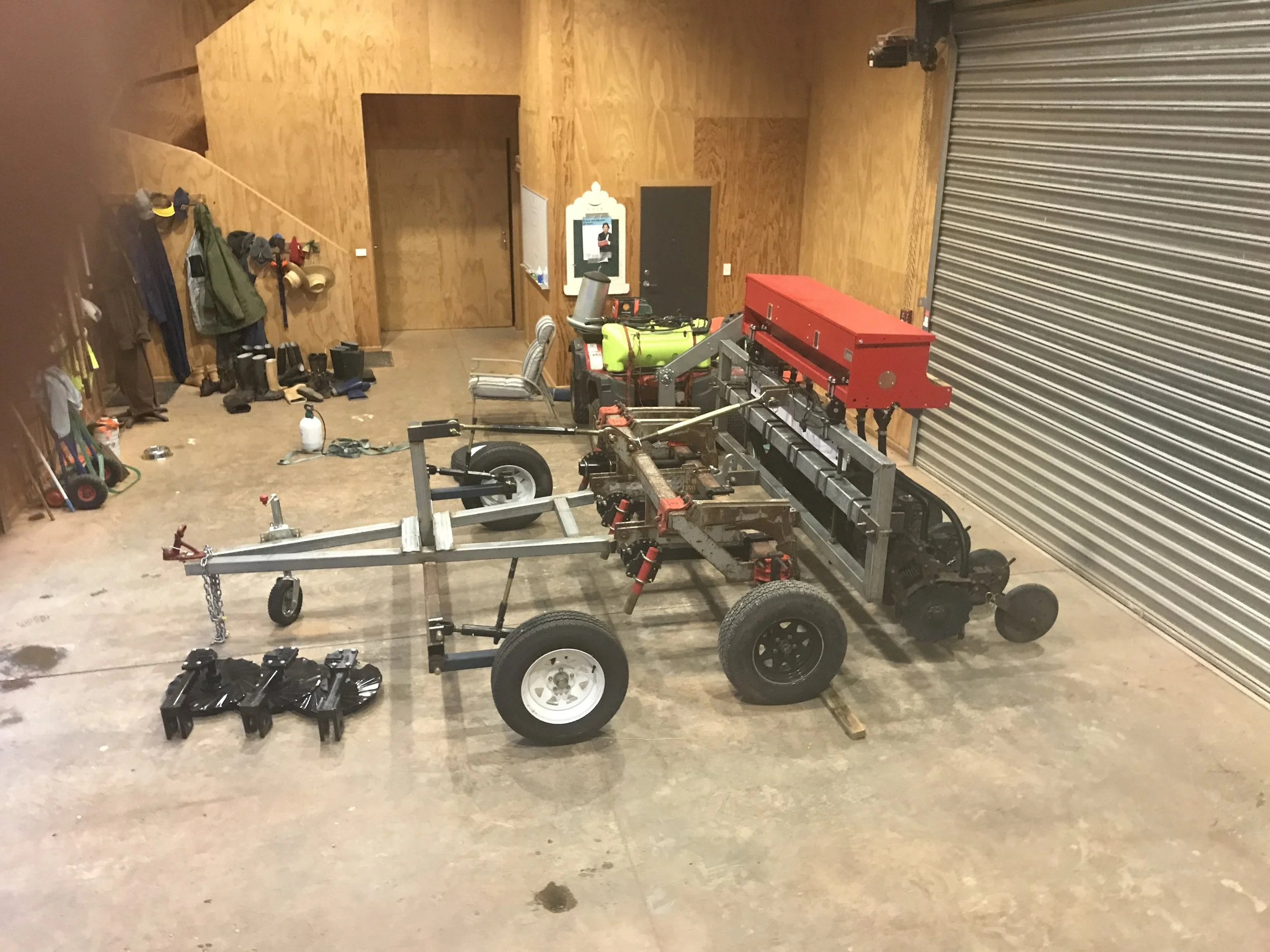
Using the lessons of all of our previous work, together we designed a super robust unit which mounted onto a standard Yeomans Plow Co. ‘SB’ toolbar.
This unit featured a 4-arm, hydraulic parabolic depth control onto which Luke placed a stunningly beautiful stainless steel fluted roller seed box which he built—complete with the Regrarians logo and ‘Regrarians Ripper Seeder’ laser etched onto the back and front.
The unit worked really well and serves as the culmination of all of the work we had all done over the previous 9 years. -
![2022 - Regrarians Ripper Rotor - Concept]()
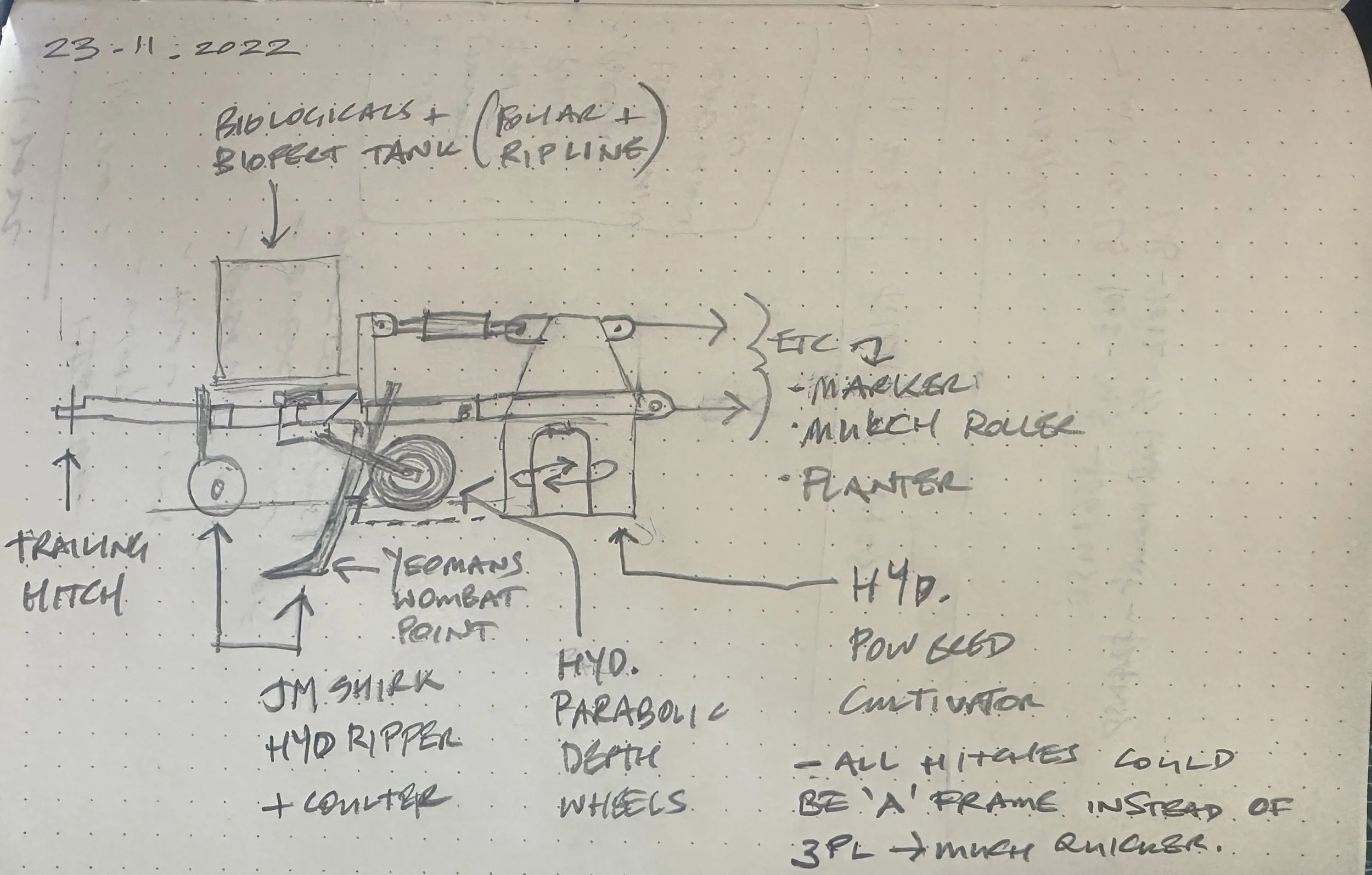
2022 - Regrarians Ripper Rotor - Concept
With the success of the Regrarians Ripper Seeder MK1, we no longer needed to work on that concept so our attention went back to improving soil preparation for woody plant establishment.
Regrarians’ Darren J. Doherty was inspired by his old friend and colleague Abe Collins’ ‘Vermont Rip Sower’, and its use of JM Shirk hydraulic rippers, while in this concept drawing he considered the use of hydraulic motors to power individual power harrows behind each shank. Like these non-inversion shanks, power harrows are also no-inversion in their action (unlike rotary hoes).
As before this concept speculated the addition of tanks for biofertilisers and microbial liquids, while also contemplating the ‘caravan’ concept of yore. This concept was drawn while the Covid-19 pandemic restrictions were still in place and so didn’t go any further—2023 would see that change… -
![2026 - Regrarians Ripper Rotor]()
2026 - Regrarians Ripper Rotor ('RRR')
Thanks to Bob Barton (Landscape Architect and Director of MALA), Regrarians’ Darren J Doherty was introduced to Covalent Land Australia Managing Director Justin Glass. Our first conversation went directly to making agroforestry soil preparation less invasive, less herbicide dependent and lower in cost.
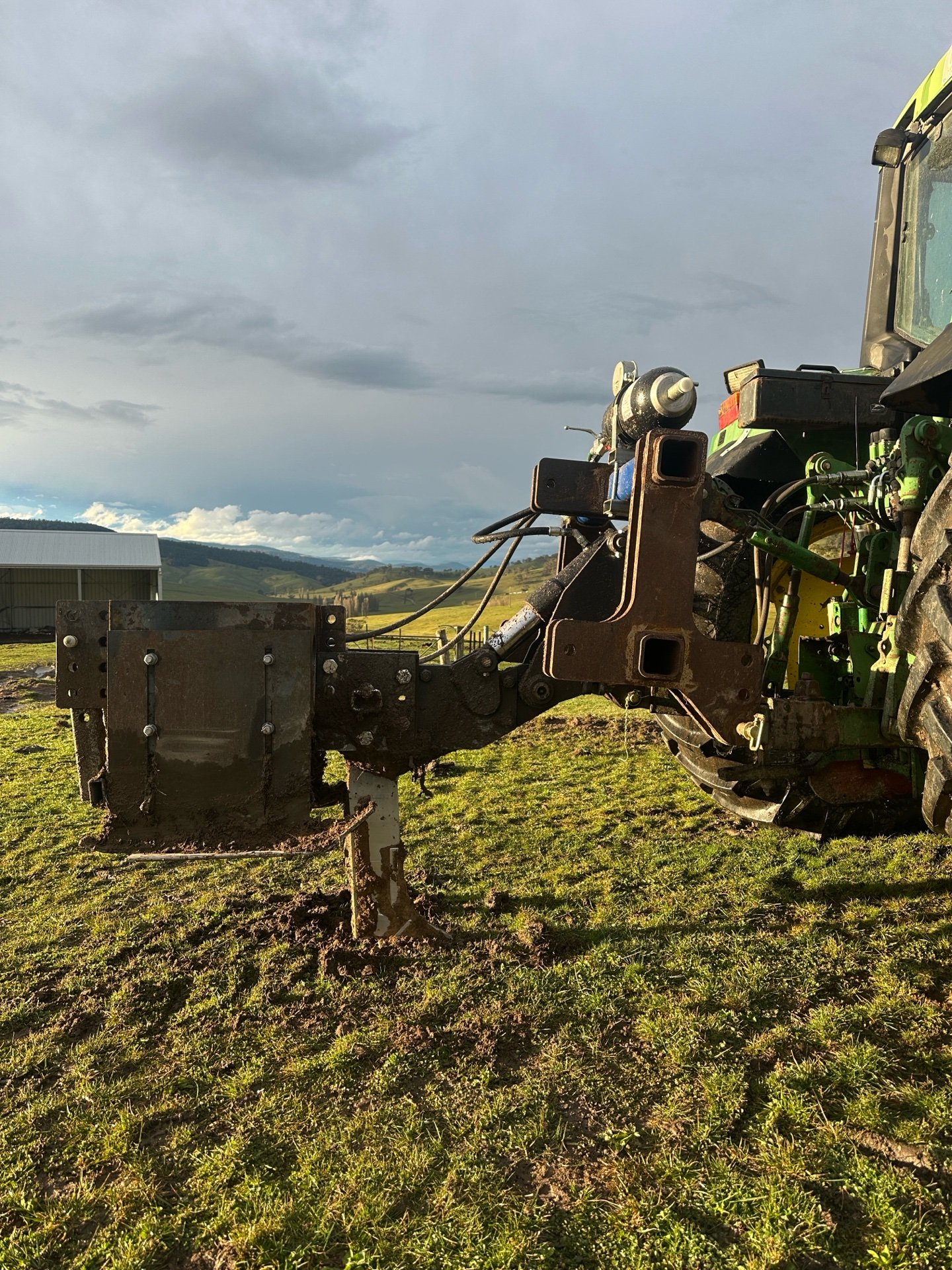
On the back of the developments with Earthbanc & Earthtree India in 2024, and building on the 2022 concept sketch, Darren designed (using QCAD) and fabricated (laser cutting by Online Laser & welding by Paul O’Keeffe of ‘Amped Up Welding) an entirely new prototype—mounting the power harrow chassis directly onto a Tilco Hydramax ripper, so that in the event of hitting a rock, the Hydramax and the power harrow would be lifted out of harm’s way and then be re-inserted without stopping the tractor.Justin introduced us to award-winning builder David Martin (The Sociable Weaver) and Regrarians completed the farm plan of his 610ha Omeo farm, including its 400ha+ carbon agroforestry project that Covalent were managing.
We have been using this site as a test-bed for the use of the ‘RRR’ and it has worked really well except for a breakage of the driveshaft of the Orizzonte power harrow assembly we brought from Italy. It served as a lesson to bulk up the shaft diameter and housing etc. for the commercialised model that is coming next thanks to a well-known Australian agricultural machinery manufacturer.
-
![]()
2026 - What's Next?
2026 has been a bit of a watershed for this 31 year project as we shift from tinkering to manufacturing and commercialisation.
Soon we will be announcing a major development in this whole concept with a partnership with one of Australia’s most innovative and leading agricultural machinery designers and manufacturers.